

Introduction
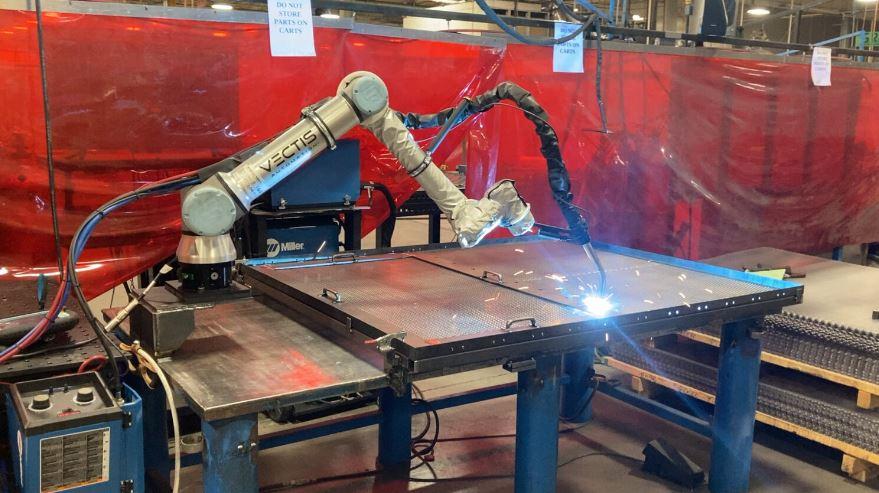
As global manufacturing demands higher quality and faster delivery, automated welding equipment has become a mainstream solution in sheet metal processing.
Compared with traditional manual welding, automation provides greater control, repeatability, and cost efficiency.
Why Automated Welding Is Important
Manual welding depends heavily on operator skill, which can result in inconsistent weld seams and productivity limitations.
Automated welding systems use programmable logic and robotic precision to eliminate variability.
Major Advantages
Consistent Welding Quality
Every weld follows programmed parameters, reducing human error.
Higher Production Efficiency
Automation increases output and shortens production cycles.
Lower Labor Costs
Fewer manual operations reduce workforce dependency.
Enhanced Workplace Safety
Workers are protected from high temperatures and strong arc light.
Materials Supported
Automated welding systems can process:
- Carbon steel
- Stainless steel
- Aluminum alloy
- Galvanized steel
Industry Applications
Automated welding plays a key role in:
- Rail transit components
- New energy equipment
- Electrical cabinets
- Server racks and enclosures
- Industrial machinery frames
Conclusion
Automated welding in sheet metal processing is no longer optional for competitive manufacturers. It ensures stable quality, higher efficiency, and scalable production capacity.